Drone services
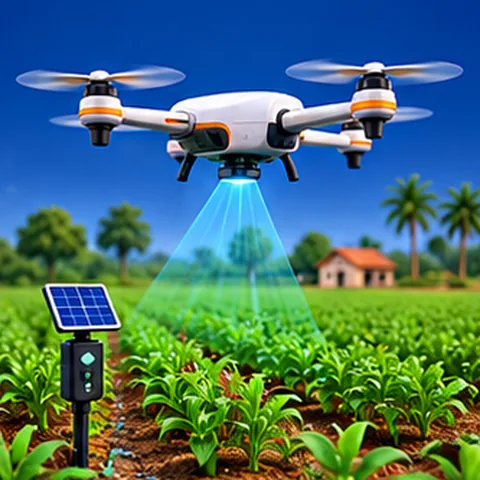
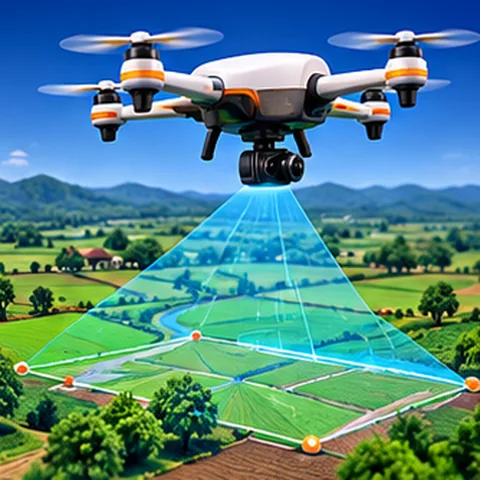
You run drone services: crop spraying for farmers, land and construction surveys, inspection of solar farms, towers and bridges, and aerial photography.
Why now
Drone rules in India are now simpler, farm labour is short, and survey and inspection work is growing with infrastructure projects.
Who it suits
Young people with technical interest who are ready to train as certified remote pilots, and agriculture or civil engineering graduates.
What you need
- A Remote Pilot Certificate from a DGCA-authorised drone school.
- A drone with type certification, registered on the Digital Sky platform, and third-party insurance.
- For spraying, use only pesticides approved for drone spraying and follow the standard operating procedure.
- A vehicle, spare batteries and a generator for field charging.
How to start, step by step
- Train and get your Remote Pilot Certificate.
- Choose one main service (spraying or survey) and learn it well with an experienced operator.
- Check the airspace map on Digital Sky before every flight; green zones need no permission, yellow and red zones do.
- Tie up with FPOs, input dealers or survey firms for steady orders.
- Register the business, GST and Udyam, and keep flight logs.
- Add a second drone and pilot once one is fully booked.
Rough starting cost
| Spraying or survey drone with batteries | ₹4–15 lakh |
| Pilot training and certificate | ₹40,000–1 lakh |
| Vehicle and field generator | ₹2–8 lakh |
| Insurance, software and spares | ₹1–4 lakh |
| Typical total | ₹8–30 lakh |
|---|
How it earns
Per acre or per job fee. Example: spraying 25–40 acres a day at ₹400–500 per acre in season, or survey jobs at ₹15,000–1 lakh each.
These are rough examples for a small team, not a promise of income. Make your own plan with real quotes.
Risks to watch
- Crashes are costly; keep spares, insurance and careful pre-flight checks.
- Spraying work is seasonal; combine it with survey or inspection work.
- Rules can change; check the DGCA and Digital Sky updates regularly.
Support you can apply for
We show the steps; you apply yourself on the official websites. VyaparaHub does not arrange funding.
DPIIT startup recognition
Who can apply: A private limited company, LLP or partnership with an innovative product or service, generally up to 10 years old.
What you get: Not money itself; it is the first step for most government startup schemes and tax benefits.
How to apply: Apply online on the Startup India portal with incorporation certificate and a short note on your innovation. Free.
startupindia.gov.in ↗TANSEED (StartupTN)
Who can apply: Startups registered in Tamil Nadu, listed with StartupTN and recognised by DPIIT.
What you get: Equity-linked grant: up to ₹15 lakh for green-tech, rural-impact and women-led startups, up to ₹10 lakh for others (TANSEED 8.0), plus a one-year accelerator.
How to apply: Apply online on the StartupTN website when a round opens; rounds open for about two weeks.
startuptn.in ↗Government and college incubators
Who can apply: Early founders who need a desk, mentors and access to grants.
What you get: Office space, mentoring and a route to seed grants; some take a small equity share.
How to apply: Approach incubators at IITs, Anna University, engineering colleges or StartupTN regional hubs with your idea and a pitch deck.
startupindia.gov.in ↗More startup ideas

AI automation for local businesses
₹2–10 lakh
SaaS software for one industry
₹5–25 lakh